
Why International Students Love the Australian Bush Experience
She stood completely still for almost ten minutes, just looking up.
Mei was seventeen, from Tokyo. She'd been in Australia for three weeks, visiting Sydney and Brisbane, seeing the Opera House and the Gold Coast beaches. She'd taken hundreds of photos.
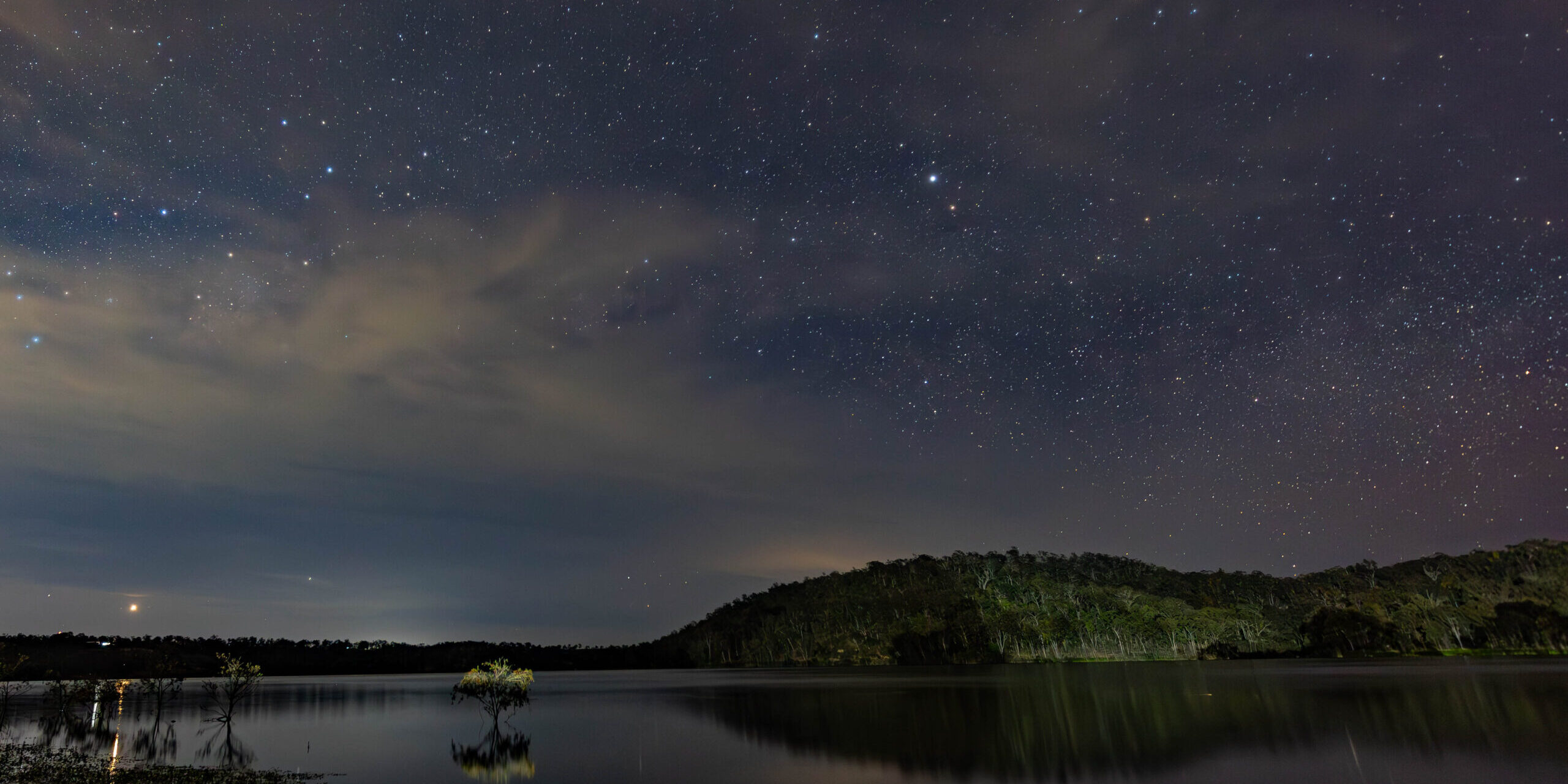
But standing in a paddock in regional Queensland at 9pm, looking at the Milky Way stretching across an unpolluted sky, she was speechless.
"I have never seen this," she finally said. "I didn't know it looked like this."
In Tokyo, she'd seen perhaps a dozen stars on a clear night. Here, she was seeing thousands – the full sweep of the galaxy, ancient light reaching her eyes for the first time.
That moment captures something we see again and again with international student groups: the Australian bush offers experiences that simply don't exist elsewhere. Not in cities. Not in tourist zones. Not anywhere in many students' home countries.
For international visitors, regional Queensland isn't just a nice backdrop. It's a revelation.
What Makes the Australian Bush Unique
Students from Asia, Europe, and the Americas often arrive with expectations shaped by movies and tourism brochures. They're prepared for beaches and the Opera House. They're not prepared for what the bush actually offers.
Wildlife in its natural habitat
Seeing a kangaroo in a zoo is one thing. Watching a mob of kangaroos graze at dusk, wild and unbothered, is something else entirely.
At Camp Cooby, international students regularly encounter:
- Kangaroos and wallabies
- Wild koalas roaming freely
- Kookaburras, cockatoos, black swans, and dozens of other bird species
- Echidnas waddling through the undergrowth
- Possums emerging at night
- Lizards, frogs, and countless insects
These aren't staged encounters or tourist attractions. They're genuine wildlife experiences – animals living their lives, observed by visitors who happen to be sharing their space.
For students from dense urban environments, this is often the first time they've seen wild animals outside of a zoo. The impact is profound.
A landscape like nowhere else
The Australian bush has a character that's instantly recognisable yet impossible to replicate.
Eucalyptus forests with their distinctive scent. Open woodlands where light filters through sparse canopy. Red and brown earth that stains everything it touches. Gum trees shedding bark in long ribbons. The particular quality of Australian light – bright, harsh, beautiful.
Students often comment that it looks "like a painting" or "like a movie." They're seeing a landscape that exists nowhere else on Earth.
The sounds of the bush
Close your eyes in the Australian bush and you'll hear things found nowhere else.
The laughing call of kookaburras at dawn and dusk. The screech of cockatoos. The buzz of cicadas so loud it drowns conversation. The rustle of unseen creatures in the undergrowth. And underneath it all, a quality of silence that urban students have never experienced.
Many international students tell us the sounds are what they remember most vividly. It's a complete sensory experience that recordings and videos can't capture.
The night sky
For students from cities – which is most international students – the night sky at Camp Cooby is genuinely shocking.
Away from light pollution, the Milky Way is visible as a bright band across the sky. The Southern Cross hangs overhead. Shooting stars streak past regularly. On a clear night, the sky contains more stars than many students believed existed.
We've had students lie on their backs for hours, just looking up. Some have cried. It's that powerful.
Campfire culture
There's something primal about sitting around a fire under the stars.
For international students, the Australian campfire experience often includes:
- Damper (traditional bush bread) cooked in the coals
- Billy tea brewed over the flames
- Stories and songs shared in the firelight
- Toasted marshmallows and campfire cooking
- Conversations that wouldn't happen anywhere else
The campfire becomes a gathering place where students from different countries connect, share stories, and experience something authentically Australian.
Why Regional Queensland (Not Just the Tourist Spots)
Many international programs focus on Australia's famous destinations: Sydney, Melbourne, the Great Barrier Reef, Uluru. These are wonderful places, but they offer a curated, tourist-oriented experience.
Regional Queensland offers something different: authenticity.
It's real, not performative
In tourist areas, Australian culture is often packaged and presented for visitors. In regional Queensland, students experience Australia as Australians actually live it.
They meet locals who aren't in the tourism industry. They see working farms and small towns. They experience genuine Australian hospitality – friendly, informal, unpretentious.
This authenticity resonates with students. They're not watching a performance of Australian culture; they're participating in it.
It's affordable
Let's be practical: tourist destinations are expensive. Regional Queensland offers exceptional experiences at a fraction of the cost of coastal tourist areas.
This means program budgets stretch further. Groups can stay longer, do more, and provide better value to students and families.
It's accessible
Camp Cooby is approximately 90 minutes from Brisbane – close enough for easy transfers, far enough to feel genuinely removed from urban life.
This accessibility makes regional Queensland practical for programs with limited time. Students can experience the "real" Australia without days of travel.
It's uncrowded
At popular tourist destinations, international students are surrounded by other tourists. The experience can feel generic – the same photos everyone takes, the same crowds everywhere.
In regional Queensland, your group might be the only visitors for miles. The experience feels exclusive, special, personal.
What Students Take Home
When international students return to their home countries, what do they remember?
We've followed up with many groups over the years. The answers are remarkably consistent:
The wildlife. Seeing kangaroos in the wild. Waking to kookaburras. Wild koalas. The possum that visited the cabin.
The stars. Always the stars. Many students describe the night sky as a life-changing experience.
The space. Room to move, to breathe, to be. For students from crowded cities, the sheer openness of the Australian landscape is unforgettable.
The people. Australian friendliness and informality. The feeling of being welcomed, not just served.
The quiet. The absence of traffic, crowds, and urban noise. Space for reflection and peace.
The connection. Bonds formed with other students around campfires and during shared challenges. Friendships that cross cultural boundaries.
These memories become stories students tell for years. They shape how students understand Australia – not as a collection of landmarks, but as a place of natural beauty, genuine people, and transformative experiences.
Creating Unforgettable Programs
For education agents and program coordinators, the Australian bush experience offers something no city itinerary can match: genuine differentiation.
Every international program visits Sydney Harbour. Very few offer students the chance to see the Milky Way, encounter wild kangaroos, and cook damper over a campfire.
These unique experiences become the highlight of Australian tours. They're what students talk about when they return home. They're what makes your program memorable.
At Camp Cooby, we work with international groups to create customised bush experiences that balance adventure, cultural immersion, and comfort. We understand the needs of international students – dietary requirements, language support, cultural sensitivities – and we design programs accordingly.
The Invitation
The Australian bush is waiting.
Not the Australia of postcards and tourist brochures, but something deeper and more real. A landscape unlike anywhere else. Wildlife encountered on its own terms. Skies full of stars. Campfires under ancient trees. Genuine Australian hospitality.
For your international students, this isn't just a nice addition to their Australian experience. It might be the part they remember forever.
Want to give your international student group an authentic Australian bush experience? Contact our team to start planning.
Packing Tips That Make Life Easier
Label everything. Yes, everything. Use a permanent marker or iron-on labels. Include your child's name and school. You'd be amazed how many identical navy blue jumpers exist in the world.
Use a soft bag, not a hard suitcase. Soft duffel bags or large backpacks are easier to store in cabins and carry across uneven ground. Hard suitcases are awkward and take up too much space.
Let your child pack (with supervision). When children pack their own bags, they know where everything is. This builds independence and reduces "I can't find my..." moments.
Pack in outfit bundles. Roll a complete outfit together (shirt, shorts, underwear, socks) so your child can grab one bundle each morning without thinking.
Put dirty clothes somewhere specific. Give your child a plastic bag for dirty laundry. Otherwise, clean and dirty clothes become indistinguishable by day two.
Include a small comfort item. For younger children or anxious first-timers, a small stuffed animal or family photo can help with homesickness. Keep it discreet if your child is self-conscious.
Check the weather forecast. Adjust your packing based on expected conditions, but always include rain gear and a warm layer regardless.
A Note on Overpacking
More is not better.
Children have to manage their own belongings at camp. An overstuffed bag is harder to keep organised, harder to carry, and more likely to result in lost items.
If in doubt, leave it out. Camps are designed to provide what students need. Your child will survive without their fourth-favourite hoodie.
The Night Before
Do a final check together:
- All items labelled?
- Medications packed with forms?
- Water bottle filled?
- Bag zipped and ready by the door?
Then stop fussing. Your child has what they need. A calm evening and good sleep will serve them better than last-minute packing panic.
Download Your Checklist
We've created a printable packing checklist you can stick on the fridge and tick off as you pack.
Heading to Camp Cooby? Our team sends detailed packing information specific to your camp program before arrival. Contact us if you have questions about what to bring.