
How Camp Builds Resilience in Children: A Parent's Guide
On the first day, she wanted to go home.
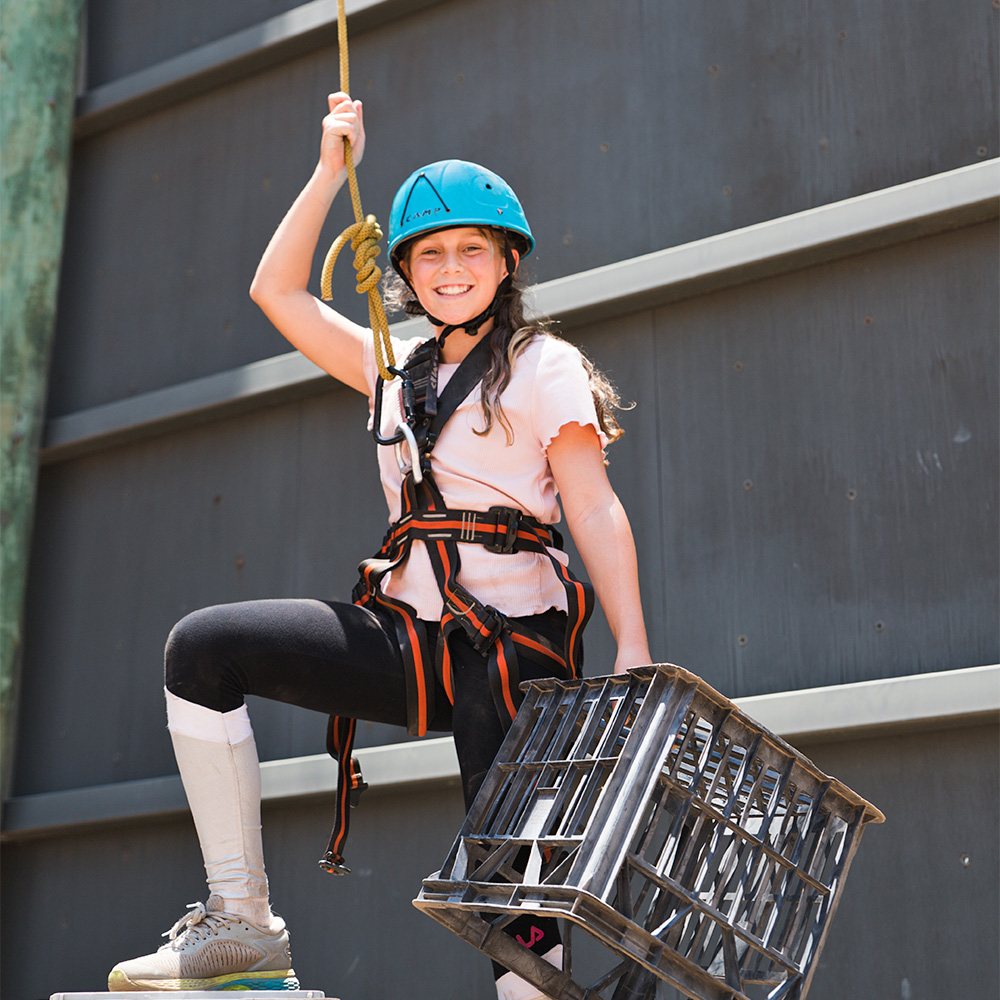
Sophie was nine years old, at camp for the first time. The High Ropes course looked impossibly high. Her cabin mates were strangers. The food was different from home. Everything felt hard.
By day two, she'd made it halfway up the tower before asking to stop. Her instructors encouraged her, but didn't push. She came down feeling defeated.
On day three, something shifted.
She woke up early, asked her cabin mates to come watch, and climbed that tower again. This time, she made it all the way up – not gracefully, not quickly, but completely.
The look on her face when she returned to the bottom wasn't just pride. It was something deeper: the realisation that she could do hard things. That struggle wasn't something to avoid, but something she could move through.
That's resilience. And camp is one of the best places to build it.






What Is Resilience (And Why Does It Matter)?
Resilience is the ability to bounce back from difficulty. To adapt when things don't go as planned. To persist when something is hard. To recover from setbacks and keep moving forward.
It's not about avoiding struggle – it's about developing the internal resources to handle struggle when it inevitably arrives.
Research consistently identifies resilience as one of the most important predictors of success and wellbeing across the lifespan. Resilient children become adults who can:
- Navigate career setbacks and changes
- Maintain relationships through difficult periods
- Manage stress without being overwhelmed
- Pursue goals despite obstacles
- Recover from failure and try again
In a world that's increasingly uncertain and fast-changing, resilience isn't optional. It's essential.
Why Resilience Can't Be Taught in a Classroom
Here's the challenge: you can't learn resilience from a book or a lecture.
Resilience is built through experience. Specifically, it's built through the experience of facing challenges, struggling, and discovering you can cope.
This creates a problem for modern childhood. In our desire to protect children from discomfort, we often protect them from the very experiences that build resilience.
We solve their problems before they can struggle with them. We smooth their path before they can navigate obstacles. We rescue them from difficulty before they can discover their own capability.
The intention is loving. The result is children who haven't developed the internal resources to handle life's inevitable challenges.
Camp offers something different: a safe environment where children can experience appropriate challenge, struggle productively, and build genuine resilience.
How Camp Creates Resilience-Building Moments
Camp is uniquely designed to build resilience. Here's how:
Appropriate challenge
Camp activities are designed to stretch children beyond their comfort zones – but not beyond their capabilities.
The High Ropes tower is scary, but it's safe. The bushwalk is tiring, but it's achievable. The group challenge is frustrating, but it's solvable.
This "zone of proximal development" – challenging enough to require effort, achievable enough to allow success – is where resilience grows.
Safe failure
At camp, children have opportunities to try, fail, and try again in relatively low-stakes contexts.
Missing a target in archery isn't a disaster. Getting lost (briefly) on a navigation exercise isn't dangerous. Struggling with a team challenge isn't permanent.
These small failures teach children that failure isn't catastrophic. It's information. It's a step toward success. This lesson transfers to higher-stakes situations later in life.
Independence from parents
This is crucial, and it's one of the things that makes camp different from family holidays or day programs.
At camp, children must solve problems without calling mum or dad. They must manage their emotions without parental comfort. They must navigate social situations without adult intervention.
This independence is challenging – and that's exactly the point. Children discover they can cope without their usual support systems. This builds confidence that persists long after camp ends.
Social navigation
Camp throws children together with peers they didn't choose, in situations that require cooperation.
They must share spaces, negotiate conflicts, include newcomers, and work as a team. These social challenges build emotional intelligence and interpersonal resilience.
Children learn that they can connect with different types of people. They learn to resolve conflicts without adult mediation. They learn to be part of a community.
Discomfort tolerance
Modern life is very comfortable. Climate control, entertainment on demand, food whenever we want it.
Camp introduces manageable discomfort: sleeping in a cabin instead of a bedroom, eating camp food instead of home cooking, being outside in weather instead of inside with air conditioning.
This discomfort isn't harmful – but it does teach children that they can tolerate conditions that aren't perfect. This is a surprisingly valuable life skill.
Natural consequences
At camp, actions have natural consequences that teach more effectively than any lecture.
Didn't pack a rain jacket? You'll get wet. Stayed up too late talking? You'll be tired tomorrow. Didn't cooperate with your team? The challenge took longer.
These consequences aren't punishments – they're learning opportunities. Children connect their choices to outcomes in ways that build responsibility and foresight.
The Parent's Role in Building Resilience
Camp does the heavy lifting, but parents play an important supporting role.
Before camp: Express confidence
Your child takes cues from you. If you're anxious about camp, they'll be anxious too. Express genuine confidence in their ability to handle challenges.
"I know some parts might be hard, and I know you'll figure it out."
During camp: Resist the urge to rescue
If your child calls home upset (if calls are allowed), listen and empathise – but don't promise to come get them. Express confidence that they can get through it.
"That sounds really hard. I know you can handle this. The leaders are there to help you."
After camp: Celebrate effort, not just outcomes
When your child returns, ask about challenges as well as highlights. Celebrate their persistence and courage, not just their achievements.
"What was the hardest part? How did you handle it? I'm proud of you for sticking with it."
Ongoing: Reference camp experiences
When your child faces challenges at home or school, reference their camp experiences.
"Remember when you thought you couldn't do the High Ropes course, and then you did? You can do hard things."
What Resilience Looks Like After Camp
Parents often notice changes in their children after camp – sometimes subtle, sometimes dramatic.
Increased confidence. Children who've faced camp challenges often approach new situations with more willingness to try.
Better problem-solving. Instead of immediately seeking help, children may attempt to solve problems independently first.
Improved emotional regulation. Children who've managed homesickness or frustration at camp often handle emotions better at home.
Greater independence. Tasks that previously required parental help may now be done independently.
More social confidence. Children who've navigated new social situations at camp often find it easier to connect with new peers.
These changes don't always appear immediately. Sometimes the seeds planted at camp take months to fully sprout. But they do grow.
The Gift of Struggle
As parents, our instinct is to protect our children from difficulty. We want their lives to be easy, happy, comfortable.
But a life without struggle doesn't build the capacity to handle struggle. And struggle will come – in school, in relationships, in careers, in life. Particularly as we are now surrounded by a world of great uncertainty and volatility.
The greatest gift we can give our children isn't a smooth path. It's the confidence that they can navigate a rocky one.
Camp provides that gift. In a safe, supported environment, children discover that they can do hard things. They can fail and recover. They can struggle and persist. They can face challenges and emerge stronger.
Sophie learned that on an abseiling tower. Your child will learn it in their own way, through their own challenges, in their own time.
And that lesson – I can do hard things – will serve them for the rest of their lives.
At Camp Cooby, we design our programs to challenge children appropriately and support them through struggle. Learn more about our approach or view upcoming camp dates.
What to Say: Scripts That Build Excitement
The goal of pre-camp conversations is to build realistic, positive expectations. Here are phrases that work:
"You're going to meet kids who like the same things you do."
This reframes the social aspect positively. Instead of worrying about making friends, your child anticipates finding their people.
"The leaders are there to help you with anything you need."
This establishes that support is available without implying your child will need rescuing. It builds trust in the camp environment.
"It's okay to feel nervous AND excited at the same time."
This validates mixed emotions without dramatising them. It teaches emotional intelligence – that complex feelings are normal and manageable.
"I wonder what your favourite part will be?"
This future-focused question assumes a positive experience and invites your child to imagine good outcomes.
"I'm going to miss you, AND I know you'll have an amazing time."
This acknowledges your feelings honestly while expressing confidence in your child. The "and" is important – it holds both truths together.
"What are you most looking forward to?"
This directs attention toward anticipation rather than anxiety. Let your child talk about the exciting parts.
"You've done hard things before, and you've always figured it out."
This reminds your child of their own resilience and capability. It builds self-efficacy.
What to Avoid: Phrases That Backfire
Some well-intentioned phrases actually increase anxiety. Here's what to avoid:
"Don't worry, it'll be fine."
This dismisses your child's feelings and implies there's something to worry about. If everything were truly fine, why would you need to say it?
"You'll probably be homesick, but you'll survive."
This plants a negative expectation. You've just told your child to expect homesickness – and now they probably will.
"Call me if anything goes wrong."
This implies things will go wrong. It also suggests you don't trust the camp to handle problems – which undermines your child's sense of safety.
"I'll come get you if you really can't handle it."
This gives your child an escape route before they've even tried. It communicates that you don't believe they can cope – so why should they?
"Make sure you tell someone if anyone is mean to you."
This primes your child to look for social threats. A better approach: "The other kids are probably feeling the same way you are."
"Don't forget to..." (followed by a long list)
Overwhelming your child with instructions signals that camp is complicated and risky. Keep practical reminders brief and matter-of-fact.
Timing Your Conversations
When you talk about camp matters almost as much as what you say.
Two to four weeks before: Introduce camp positively. Share what you know about activities. Answer questions simply and confidently.
One week before: Handle practical preparation (packing, etc.) calmly. Keep conversations light and positive.
The night before: Keep it low-key. This isn't the time for big emotional conversations. A simple "I'm excited for you" is enough.
The morning of: Be calm, confident, and brief. Your energy sets the tone. Long goodbyes make things harder, not easier.
At drop-off: Say goodbye warmly but quickly. Trust the camp leaders to take over. Don't linger, even if your child seems unsure.
How Much Detail is Too Much?
Some children want to know everything. Others are overwhelmed by too much information.
Follow your child's lead. Answer questions they ask, but don't volunteer information they haven't requested. If they want to know the daily schedule, share it. If they haven't asked, they probably don't need to know.
For anxious children, too much detail can fuel worry. Keep explanations simple: "You'll do fun activities during the day, eat meals with the other kids, and sleep in a cabin with your group."
For children who like to know what's coming, a general overview helps: "In the morning you'll have breakfast, then activities. After lunch there's more activities and free time. Dinner, evening program, then bed."
Avoid over-preparing for every possible scenario. You can't anticipate everything, and trying to will only increase anxiety.
A Note for Anxious Parents
If you're feeling nervous about your child's first camp, that's completely normal. But it's important to manage your own anxiety so you don't transfer it to your child.
Some strategies:
- Talk to the camp beforehand. Ask your questions, voice your concerns, and let their answers reassure you.
- Remember why you're sending your child. The benefits of camp – independence, resilience, confidence – are worth temporary discomfort.
- Trust your child. They are more capable than you might think.
- Trust the camp. They've done this before. They know how to support first-time campers.
- Find another adult to share your worries with. Your child shouldn't be your emotional support.
The Payoff
When you get these conversations right, you set your child up for success.
They'll arrive at camp feeling excited rather than scared. They'll trust the leaders to help them. They'll expect to have fun – and that expectation becomes self-fulfilling.
And when they come home, buzzing with stories and asking when they can go back, you'll know those careful conversations made all the difference.
At Camp Cooby, we're here to support you and your child through their first camp experience. If you have questions or concerns, reach out to our team – we're happy to help.